The scaffolding is the product
Anthropic accidentally published 512,000 lines of Claude Code's source. The interesting part isn't the model — it's the context management plumbing around it.
Last week, Anthropic accidentally shipped a 59.8 MB source map file inside a routine npm update for Claude Code. The bundler generated it by default, nobody caught it, and for a few hours the entire TypeScript source — roughly 512,000 lines and 1,900 files — was publicly accessible to anyone who downloaded the package.
The internet reacted the way the internet does. Security people talked about the security failure. Competitors probably took a very careful look. And a lot of developers immediately started digging through the code to understand how Anthropic actually builds its agentic tooling.
I've been writing about context management for months now. When I saw what was in those files, my first reaction was: I've been building a toy version of this by hand.
What the source actually reveals
The headlines focused on the leak itself — the embarrassment, the security angle, the fact that this was Anthropic's second public data fumble in a week. Fair enough. But if you're interested in how production AI systems actually work, the architecture is the story.
Claude Code's source exposes a four-stage context pipeline. At the base: a layered instruction hierarchy — global rules, user-level preferences, project-level CLAUDE.md files, and private local overrides. On top of that: a tools layer with modular capabilities, a services layer for API integration and telemetry, and an agent orchestration layer for multi-agent coordination.
The part that caught my attention was the memory architecture. Claude Code uses what amounts to a three-tier memory hierarchy, and every design decision revolves around the same constraint I've been writing about since February: context windows are a scarce resource, and the system that manages them best wins.
Tier one is the always-loaded layer — the equivalent of my CLAUDE.md files. Small, structured, loaded at the start of every session. Tier two is episodic memory — decisions, progress, architectural context that gets retrieved when relevant. Tier three is working memory — current task state, overwritten frequently, scoped to the active session.
I built this exact structure with five markdown files and a starter prompt. Anthropic built it with 512,000 lines of TypeScript. The fact that we arrived at the same architecture from opposite ends of the spectrum isn't a coincidence — it's the architecture that the constraints demand.
Context engineering goes official
The leak landed in the same week that Anthropic published their official guide to context engineering for AI agents — a detailed, well-written piece that essentially makes context management a named discipline. Not a prompting trick. Not an afterthought. A core engineering concern with its own principles, patterns, and failure modes.
The guide covers ground that will be familiar if you've read my earlier posts: the gap between theoretical context window size and effective context utilization, the importance of compaction and structured summarization, the need for just-in-time context loading rather than stuffing everything upfront. But Anthropic frames it at the infrastructure level — as something you design into the system, not something you manage manually with handover notes.
A few specific patterns they call out are worth noting.
Compaction — taking a conversation nearing the window limit, summarizing it, and restarting with the summary. This is exactly what I do with HANDOVER.md at the end of each session, except automated and continuous. The key insight from their guide: the quality of the compaction determines everything. Lossy summaries that drop constraints or decisions produce the same silent context degradation I wrote about months ago.
Curated tool sets — keeping the number of available tools small and well-defined for each agent, rather than giving every agent access to everything. This maps directly to the separation of concerns pattern I described for multi-agent teams. If a human engineer can't definitively say which tool should be used in a given situation, an agent can't be expected to do better.
Just-in-time context loading — maintaining lightweight references and dynamically pulling data at runtime, rather than pre-loading everything into the window. This is the "workbench, not a bucket" principle from my context architecture post. Don't fill the window — curate what's on it at each step.
The scaffolding is the actual product
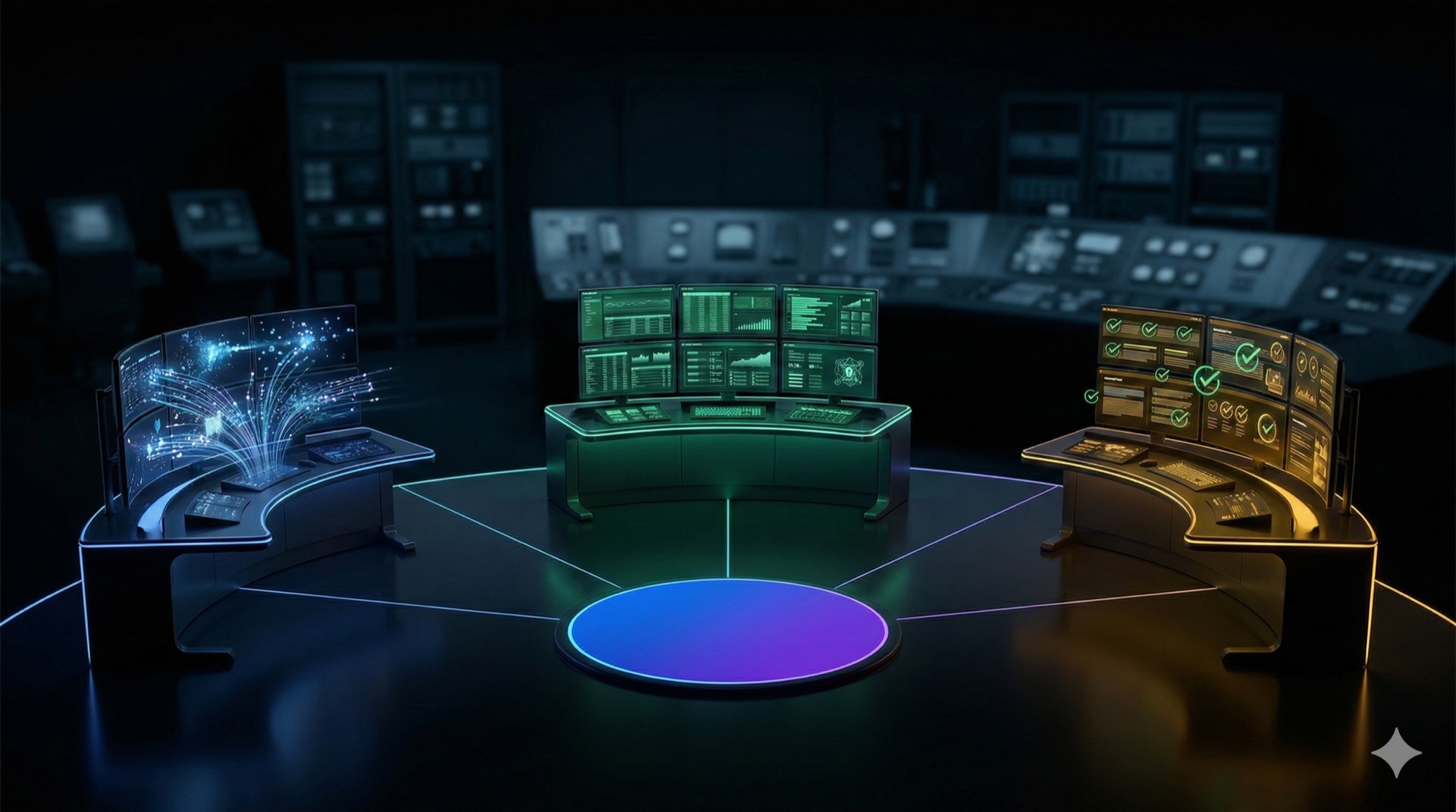
Here's what struck me most about the leak: 512,000 lines of code, and almost none of it is about the model. It's all scaffolding. Context pipelines, memory management, tool orchestration, permission schemas, session persistence, telemetry. The model itself — Claude — is accessed through an API call that takes up a trivially small fraction of the codebase.
This confirms something I've been circling around in my writing but hadn't stated this directly: the AI model is a commodity. The context architecture around it is the product.
Claude, GPT-4, Gemini — the base models are converging. They're all good enough for most tasks. What differentiates the tools built on top of them is how they manage the information the model sees. How they persist state across sessions. How they compress without losing critical constraints. How they scope context so the model's attention stays on what matters right now instead of drowning in irrelevant history.
That's why I called my earlier post "the context wars." The competition isn't about model benchmarks anymore — it's about who builds the best context infrastructure. Anthropic's leaked source is the most detailed public evidence of how seriously the leading labs take this.
What this means for everyone else
If you're building on top of these models — whether that's enterprise AI tooling, internal agents, or just trying to get reliable results from your coding assistant — the leak is a gift. Not because you should copy Anthropic's code, but because it validates a set of architectural patterns that you can implement at any scale.
The patterns are:
Hierarchical memory with clear tiers. Separate what's always needed from what's sometimes needed from what's only needed right now. Don't treat context as a flat conversation history — treat it as a managed resource with different storage and retrieval strategies for different types of information.
Aggressive, structured compaction. Don't let conversations grow until they degrade. Compress proactively, preserve decisions and constraints, drop the noise. The quality of the compression matters more than the frequency.
Scoped tool access. Give each agent or workflow exactly the tools it needs, nothing more. Tool descriptions consume context tokens, and a bloated tool set dilutes the model's ability to choose correctly.
Explicit state externalization. Don't rely on conversation history for anything that matters. Write it down — in structured files, in databases, in whatever makes sense for your stack. Make context auditable and versionable.
I've been doing all of this with markdown files and a starter prompt. It works. But the direction of travel is clear: these patterns will become built-in features of every serious AI development tool. The manual approach was always a bridge to the automated one.
The uncomfortable implication
There's a tension in the leak that most commentary has missed. The exposed architecture includes not just context management, but also permission schemas, feature flags, and telemetry instrumentation. Security researchers have already noted that attackers can now study exactly how data flows through Claude Code's context pipeline — and potentially craft inputs designed to survive compaction.
This is the flip side of context-as-infrastructure. When context management becomes a system, it also becomes an attack surface. The same structured memory that makes agents reliable also creates predictable patterns that adversaries can exploit. It's the organizational equivalent of what I described in my context governance discussion: once context stops being an emergent property and becomes an explicit layer, you need to govern it — with access controls, audit trails, and security review.
Anthropic's official response focused on the security angle: no customer data was exposed, it was a packaging error, they've patched it. Fair enough. But the broader lesson is that context architecture is now a security-relevant system, not just a convenience feature. That's a maturation signal for the entire industry.
Where this leaves practitioners
I've been writing about context management as a practice for two months. The Claude Code leak and Anthropic's official guide together make a case I couldn't make on my own: this is not a niche concern. The company that arguably leads in AI agent tooling has invested hundreds of thousands of lines of engineering into exactly the problem I've been solving with five markdown files.
That doesn't mean my approach was wrong — it was right, and the leak proves it. But it was always a manual approximation of something that should be infrastructure. The fact that we're now seeing the production version of that infrastructure, in detail, means the conversation can shift from "should you manage context?" (yes, obviously) to "how should context management be built into your tools and workflows?"
For individual practitioners: keep your .md files. They work, they're auditable, and they'll keep working even as the tools get smarter. But expect your tooling to start doing this for you within the next year.
For teams building AI-powered products: study the patterns in the leak. Not the code — the architecture. The memory hierarchy, the compaction strategy, the tool scoping, the state externalization. These are the design decisions that determine whether your agent is reliable or just occasionally impressive.
For organizations thinking about AI strategy: the scaffolding is the product. Invest in context infrastructure, not just model access. The model is a phone call away. The context architecture that makes it useful is months of engineering — and it's where the competitive advantage actually lives.